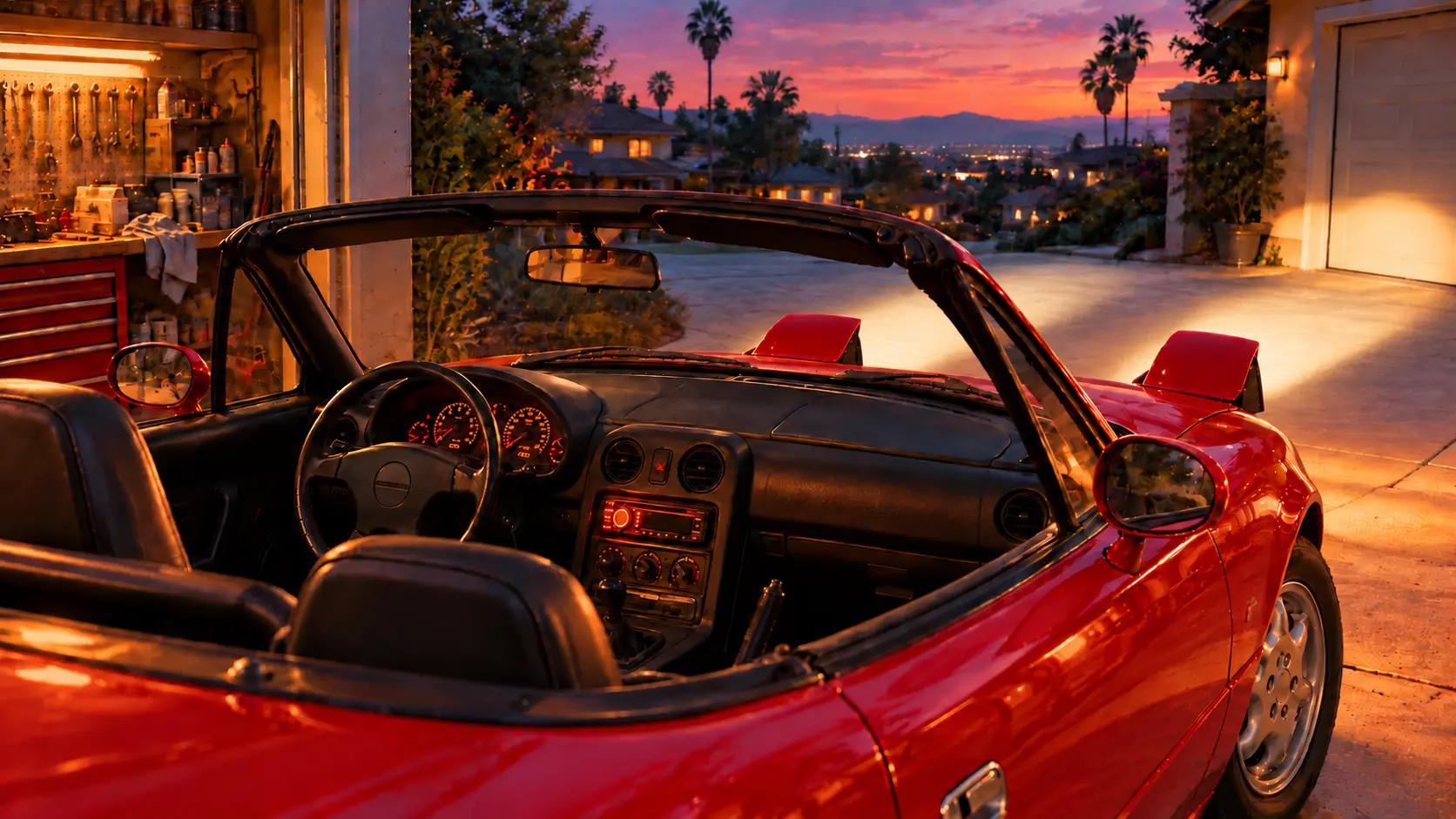
The first changes we made weren’t about making the Miata faster.
Mostly, we wanted to correct the things that had deteriorated over the years, undo a few questionable past repairs, and make the car more enjoyable to use.
It started with the radio.
Something Worth Listening To
The drive home from San Diego had already told us everything we needed to know about the original audio system.
Connecting to Bluetooth took forever. Once it finally worked, the blown speakers made the effort feel almost pointless.
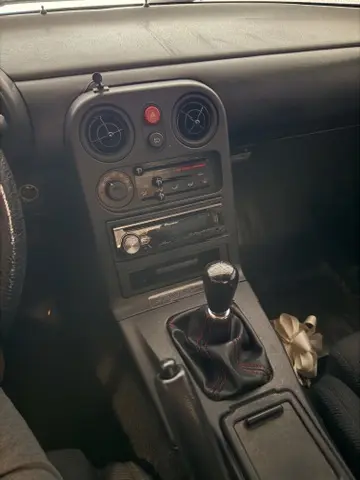
After taking everything apart, I discovered that the speakers weren’t merely old. They were torn, improperly sized, and installed alongside wiring that had been modified fairly carelessly.
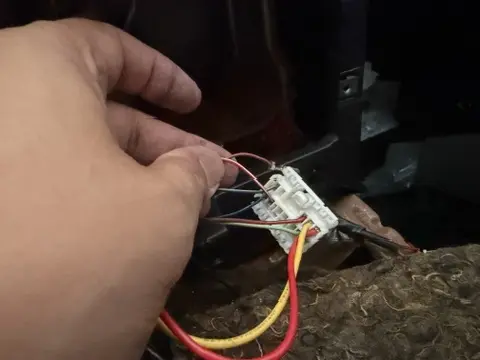
The factory radio connector had been cut off by a previous installer. Fortunately, repairing that was straightforward. I bought Metra car-side harnesses and spliced the repair wires into the factory wiring, restoring a proper connector instead of adapting the new radio around someone else’s shortcut.
The doors revealed another problem.
At some point, the rubber accordion boots between the doors and the body had been removed so someone could run their own speaker wiring. They were never reinstalled.
That was frustrating, but I made use of what was still there and ordered replacement door harnesses from eBay so I could restore everything properly later.
It was one of those jobs that reminded me why I prefer doing my own work. You never really know what you’ll find behind a panel after a random shop or installer has been there.
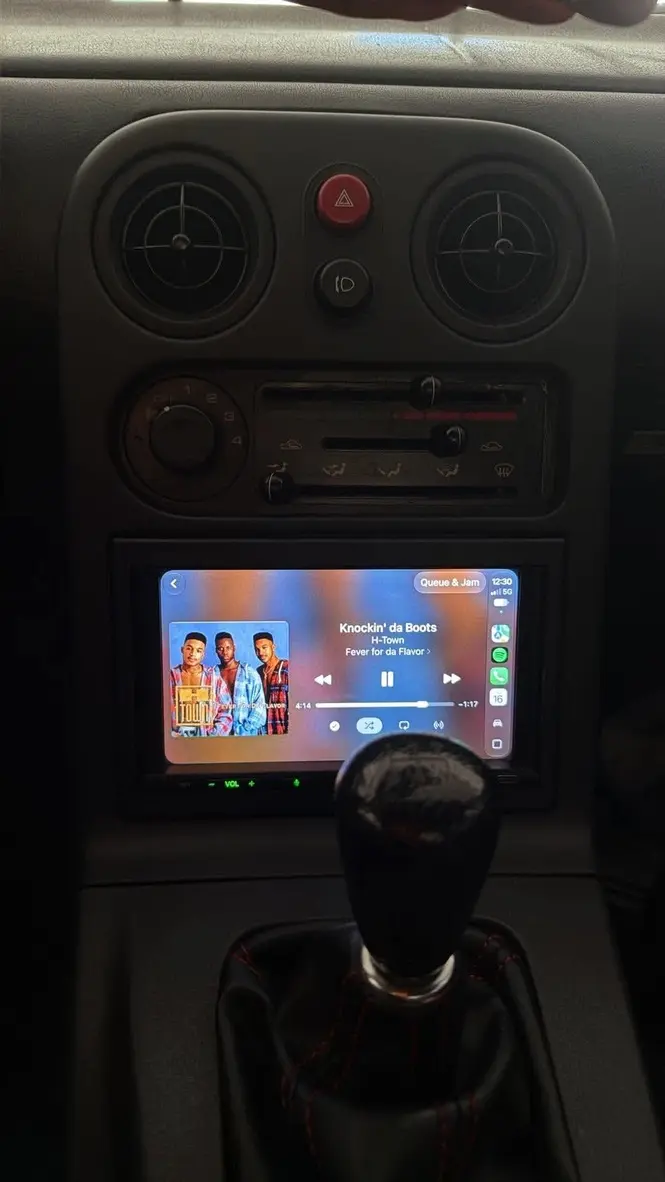
For the replacement system, I installed a CarPlay head unit with Pioneer TS-A653CH component speakers and speaker baffles. I mounted the separate tweeters in the upper door pads, giving the system a much fuller and more complete sound than the torn speakers could ever produce.
CarPlay was an easy decision. I install it in every car I own because of the convenience, and I wanted Azuki to have it too.
I also used a JDM radio surround and a Metra installation kit. The goal wasn’t necessarily to make the installation look period-correct. I just wanted it to look clean, complete, and intentional.
Once everything was installed, the difference was enormous. The system finally had intact speakers, dedicated tweeters, and enough clarity to make music sound like music again.
Restoring the Miata’s Best Control
The shifter was another problem I had noticed before the car officially became ours.
When we drove my wife’s dad’s Miata the year before, I could feel heat coming through the shifter area. I suspected that the rubber boots were no longer sealing the transmission tunnel properly.
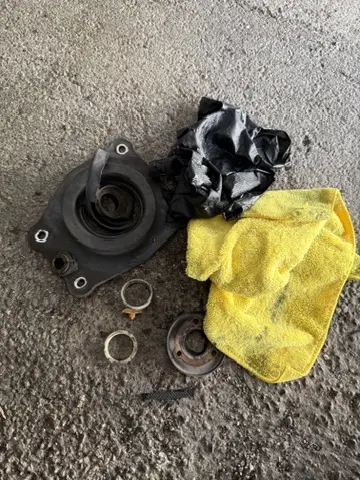
Once I removed the center console, the problem was obvious. The large main shifter boot was torn, and the smaller seal around the shifter turret was beginning to fail.
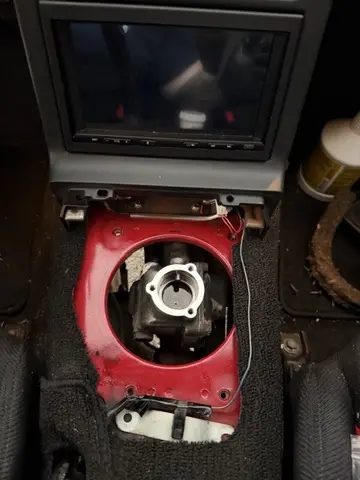
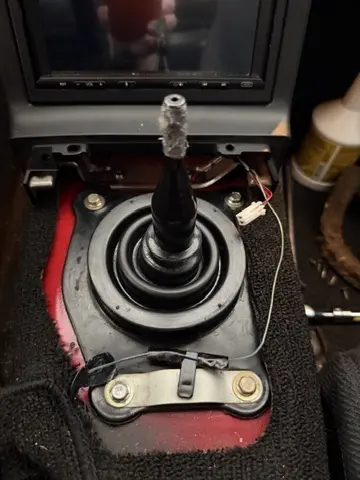
The worn plastic pieces inside the assembly were likely contributing to the loose, sloppy shifter feel as well.
I rebuilt the assembly with new boots, bushings, seals, and a brass lower cup. Afterward, the shifter felt considerably more solid and precise—much closer to what a Miata shifter is supposed to feel like.
The improvement wasn’t limited to shifting. With the torn boots replaced, transmission-tunnel heat stopped pouring into the cabin. The oily smell inside the car disappeared too.
While working around the controls, I also discovered that the clutch-pedal stopper was completely gone. Without it, releasing the clutch ended with an unpleasant metal-on-metal clang.
It was a tiny missing component, but replacing it removed another sound that made the car feel more worn-out than it actually was.
Parts We Had Been Saving
Not every early change was a repair.
I had owned a KINOD aluminum coolant-overflow tank for roughly a year before Azuki came into our lives. I originally purchased it through a limited group buy to support the car club I had been attending for many years.
The tank carries the KINOD logo along with a tribute to one of our close friends who passed away from cancer many years ago. Because of the club-specific laser engraving and limited production, it wasn’t something I could simply purchase again later.
I held onto it while waiting for the right car.
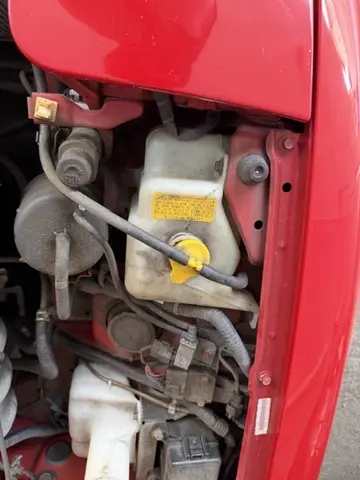
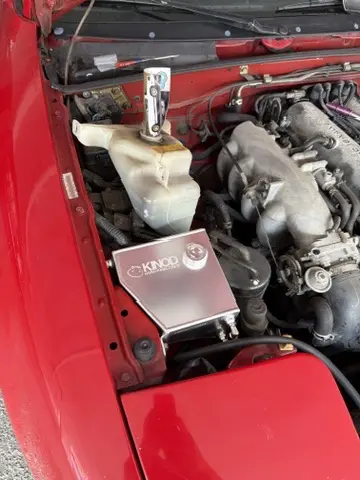
Installing it in Azuki felt good. It was her first real dress-up modification, but it meant considerably more than installing a random polished part in the engine bay. It represented friendships, memories, and a community that had already been part of my Miata journey for years.
Azuki finally gave it a home.
The GarageStar Delrin door bushings had a similar story.
GarageStar belonged to a good friend of mine, and these bushings are no longer being produced. When I found someone selling a set locally, I picked them up in preparation for eventually owning another Miata.
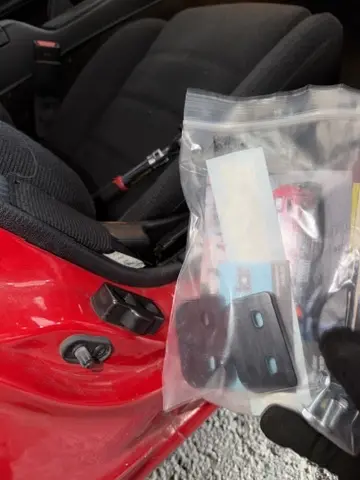
Replacing the compliant factory bushings with the Delrin pieces helped tie the door area together more firmly. The car felt more solid afterward because the doors no longer moved and flexed as much.
The tradeoff is that the doors can occasionally take a little more effort to close—but that’s a small price to pay for something I had specifically wanted to preserve and use.
Better Than Candlelight
The headlights were the final major piece of this first round of work.
From what I could tell, one of the sealed-beam headlights may have been original to the car, while the other had been replaced at some point during its life.
Driving with them felt like trying to illuminate the road with candlelight.
That was inconvenient around town and genuinely concerning anywhere without streetlights.
My wife found another Miata owner who had installed Toyota FJ Cruiser seven-inch headlight housings and reported that they fit perfectly. Based on that experience, I decided to try the same setup.
I didn’t want to install standard halogen bulbs, but I also didn’t want the harsh, blue-white appearance commonly associated with 6000K LEDs. I paired the housings with tunable LED bulbs so I could use a warmer color temperature while still gaining modern light output.
The installation was as straightforward as the original owner had described. Packaging the LED harnesses and ballasts required a little finagling, but once everything was positioned properly, the rest was smooth sailing.

The improvement was immediate.
I could finally see at night—whether I was driving through town under streetlights or along a completely dark mountain road.
For a car we planned to enjoy regularly, that was more than an aesthetic upgrade. It made Azuki safer and far more usable.
Becoming Our Car
None of these changes radically transformed the Miata.
The engine was still stock. The suspension was still old. The original wheels were still there. There was still a long list of maintenance and improvements ahead of us.
But the car was beginning to feel different.
The radio worked properly and sounded complete. The shifter felt solid and precise. Heat and oily smells no longer entered through the transmission tunnel. The clutch pedal stopped clanging against bare metal. The doors helped the body feel more settled. The headlights finally illuminated the road.
A few meaningful parts that I had saved for years finally had somewhere to belong.
More importantly, things were beginning to feel sorted out and restored.
Azuki had arrived as a car entrusted to us by my wife’s dad. With every careful repair and considered upgrade, she started feeling a little less like a car we were temporarily looking after.
She was starting to feel like our car.
Back to RoadsterThings←